Start Setting Boundaries With Others or Be Miserable.
Boundaries Make Us Happy, and Other People Miserable.
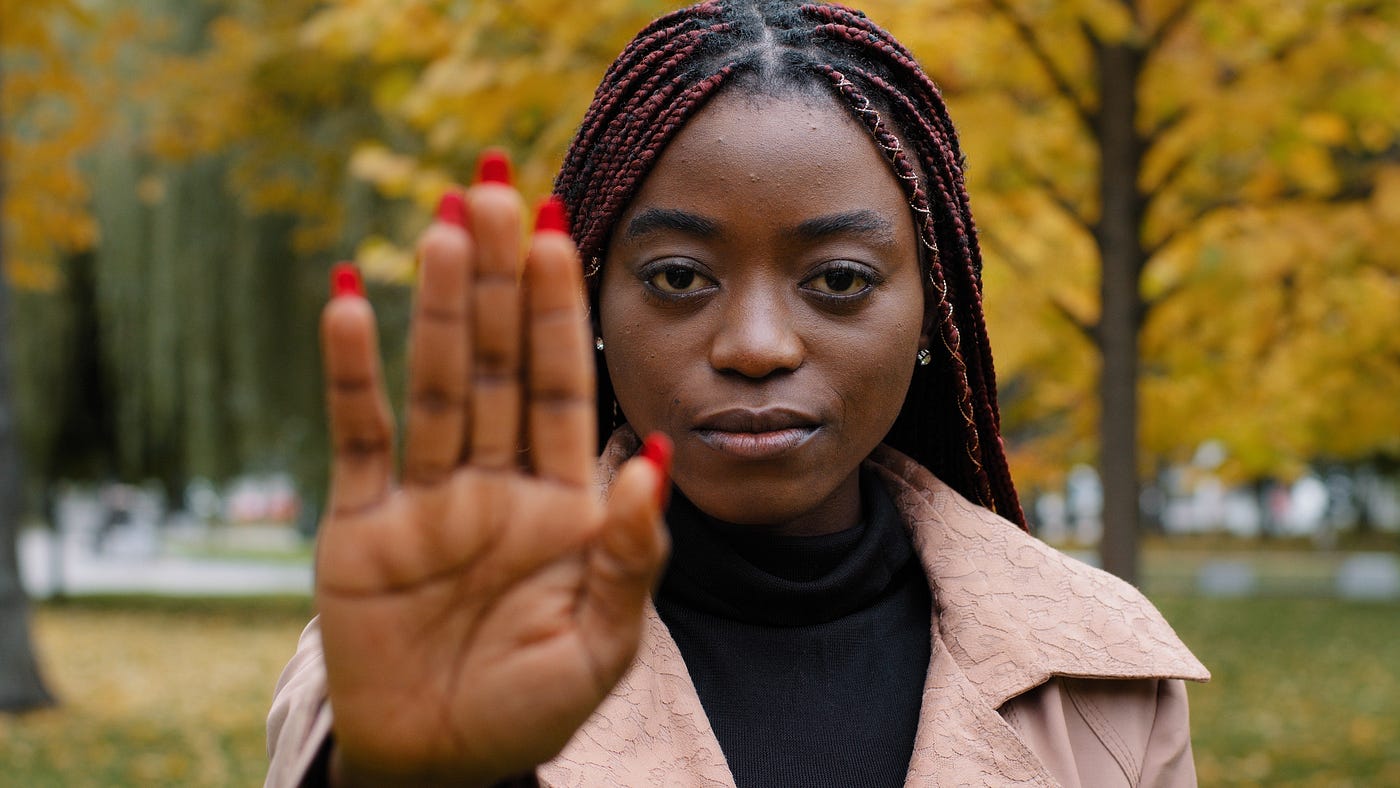
When working on yourself to be a healthy, functional adult, self-esteem and boundaries are the two tools that must be in your toolbox, or you might as well forget it and accept your life of misery, suffering, and victimhood. A carpenter can’t do their job without hammers, screws, and nails, and a painter can’t do theirs without a brush and paint. A person without healthy self-esteem and firm but flexible boundaries is a mistake waiting to happen, and mistakes will happen, and there will be pain.
If you are tired of yourself and the way your life is going, remember that we have discussed the importance of self-esteemand what you must do to achieve it. Now, it’s time to learn how to establish healthy boundaries. Understand that when you do this, people will get pissed. They will tell you that you are being difficult, that you are mean, or a bitch or an asshole, but you are not. You have made a crucial life decision to set boundaries and live a healthy life by managing who is allowed in and who is not, and by controlling what you are willing to do and what you are not. As an adult, you have every right to manage your life in the way that is healthiest for you.
When you do this for the first time, you may feel a tinge of guilt. Of course, you do, because you still live by a belief or value that you took on many years ago that said, “I think it is wrong to hurt or disappoint people.” Humans often feel guilty when they do something that contradicts their beliefs and values. The problem is that many of us are still living by beliefs and values we adopted before we were 10 years old. These may have worked for us then, but many, and I mean very many, of the beliefs and values we currently hold ourselves to are outdated and no longer effective for us. They prevent us from getting healthy and doing the right thing on our own. These beliefs must be brought to light, reexamined, and rewritten. For example, suppose you now believe what I just wrote above, that it’s wrong to hurt or disappoint people. In that case, you might amend that to a new belief that says, “I don’t enjoy hurting or disappointing people, but I recognize that to manage my life healthily, I may have to do that on occasion, and it is okay to do that.” Your new belief or value must be something that you sincerely believe is right and serves you better than the old belief.
Most of the people we deal with — friends, family, co-workers — are grown-ass adults, by the way, as in big boys and girls. Big boys and girls can handle being hurt and disappointed, and understand that it is a part of life. Think about how nuts it is to spend your adult experience bending and weaving so that you never hurt or disappoint others. Think about how you throw yourself under the bus when you do that. If you want to be healthy, you have to prioritize your well-being over others’. Others will be doing the same for themselves, I hope. It’s a good thing, the right thing to do, and the only path to peace and contentment. If you aren’t going to do this, then throw in the towel and join the throngs of people who endure miserable lives sacrificing for others, but do stop complaining and embrace the fate that you chose.
We Inherit Boundaries.
Most of us end up with a boundary system similar to the one we grew up with. My family was boundaryless, up in everyone’s business, never diplomatic, and always trying to control what everyone else did. Since we didn’t learn how to protect or restrain ourselves, the default plan for dealing with others’ wrath was to suffer silently, hide, stay off the radar, isolate, and numb our emotions with sugary treats and homemade southern-style dinner rolls soaked in butter.
I grew up to be loud, obnoxious, stoic, emotionally avoidant, anxious, attached, and a people pleaser. My mother was an elite athlete-level people pleaser, so, of course, I was programmed by her nagging and admonishing to never complain. I naively trusted everyone because I wasn’t taught not to. My inability to protect myself in early adulthood got me beaten up emotionally and financially. How many times is one willing to be bruised up before they say, “I need to figure out what’s going on and possibly change a few things”
I got the message when I was about 27, when my lack of action led to debilitating depression and panic attacks. To the point that at times, I could not get off the couch, even if the house were on fire. Going to therapy set me on my path to learning how to manage my mental health on a daily, hourly, minute-to-minute basis, constantly tweaking and adjusting things to keep my inner peace. Learning boundaries was all about survival for me. I had to know and practice them, or it would be my demise.
The question for you is: how much pain are you willing to endure before you stand up and set boundaries? The self-esteem aspect is crucial because you must value yourself enough to want the best for yourself, to protect yourself from harm, and create a life that works. If you can’t treat yourselves like you would your own child, and protect yourselves in the same way with a mamma or papa bear ferocity, then you’re not there. I want every person to think of themselves as precious, valuable, and worth fighting for and protecting from harm. It’s not just going to arrive one day; it is a decision you must make: You are the Hope diamond. You are the crown jewels. You are the most valuable object in the world. You do not have to tolerate unkindness, cruelty, nosiness, judgment, unsolicited observations and advice, interference in your life in any form, and you do not have to do anything you do not want to do unless the law dictates it.
The Boundaryless Person is Coming for You If You Don’t Stop Them.
Put 500 people in a room, and a boundary offender will find the one boundaryless person in the room like a male dog to a bitch in heat. Boundaryless people who tolerate what they should not are vulnerable and unprotected out in the world, the same as a child might be. People who are controlling and like to take advantage of others can sense them, will meet them, and give them a few preliminary tests to see if they yield and are compliant. If the person checks out as boundaryless, it will be a go. They will use every means to entice you into their life. Whatever kindness and generosity they show in the beginning will not last. Once the hook is firmly in your mouth, the offender will take control of your life, and if your self-esteem is on the floor, you will think you don’t deserve any better, or say, “Look what I’ve got myself into now,” but do nothing.
You might think that you aren’t smart enough to manage your own affairs, that you have to have another adult in your life to survive, so you just hand over the reins of your autonomy to the offender and allow the abuse and control to begin. The person will talk down to you like a child, demean you, and criticize. They will have no problem removing you from the things you love and value, including your loved ones, or even beloved pets, geographical areas, careers, education, or whatever.
If you had had appropriate boundaries, you would have bolted at the first red flag and removed them from your life. They wouldn’t even have your phone number, much less take their phone calls, had you noticed the signs … love bombing, too good to be true, pushy, moving too fast. Love is never supposed to feel bad. It is supposed to enhance your life. A love-based relationship is kind and generous, but boundary offenders don’t feel love; they want you to do something for them. The fact that you will acquiesce to them and serve them is a heady drug that causes them to feel false power, when underneath is that dreadful, toxic shame. You are a means to an end, and if you rebel or push back, they will accuse you of being the worst person in the world when you are nothing close to that. But you value their opinion more than your own, because your self-esteem is on the floor.
Parents, siblings, and any family member can be that way, too. I have seen many super successful clients taken advantage of by family members who demand help they should be able to provide themselves. They have no problem with you dropping your life and dreams so you can do what they need you to do.
One of my daughter’s friends ended up being a full-time caretaker to her mother-in-law. The woman could barely move and couldn’t control her bowels. The work was labor-intensive and dreadful, but the family didn’t want to spend money on a nursing home, so they pressured my daughter’s wonderful, talented, amazing friend to step in and do the dirty work, and she did, because she is a people-pleaser. She grew up in a home where mental illness and hoarding were so terrible that she couldn’t even live with her parents. To her, her life is to be someone’s beast of burden. This young woman has a degree from the University of Texas. She is talented and brilliant. Yet she has never believed in her value and has no self-esteem or boundaries. We have all seen people like her.
What could I do for her? It’s not my place to comment on it, to rescue anyone, to offer her advice, to try and fix any of it. I practice healthy boundaries, which dictate that no adult has the right to try to change, fix, control, advise, or comment on what another adult is doing without their invitation. As a result, I’ve never said a word.
In the end, the mother-in-law passed away, the family took what money she had left, and didn’t even thank their sister-in-law or reward her in any way. They were boundary offenders par excellence. Users. But my daughter’s friend had no boundaries; she acquiesced and gave up years of her young adult life, and for what?
Family members can be some of the worst offenders when it comes to boundaries. Many have expectations that they created out of thin air, without our agreement, and they attempt to put them on us. Clients are told by their family members that they “have to do X,” because “It’s family.” You may be expected to let your parents move in, to take care of them, to raise your sister’s child, to co-sign, to loan or give them money, to support them, to call or text, to visit on a regular basis, to do whatever it is they want you to do, and none of that is true.
Our relationship with our biological family is optional once we are grown. Although many of us value having them in our lives, those who have chosen to walk away or participate on a minimal level should not be judged. Most families like this are unaware of their boundarylessness and lack the empathy to understand the burden they place on their family members. Their belief or value system may be that “You owe me,” but the truth is, you do not. All adults have the right to live their lives as they choose, without pressure to conform to others’ expectations.
Bad Behavior is everywhere. Protect Yourself.
Boundaries are the way we protect ourselves. They are our security system. The idea is to prevent people from harming us psychologically, emotionally, or physically, and we are not to harm others in those ways. We have to keep them flexible, however, so we can let in the people who are safe and have our best interests at heart.
I am sure most of you are inundated daily with boundary offenders in the form of attempted scams. The psychopaths who do this to others are counting on the fact that there are boundaryless, gullible people out there who believe the best in people. The healthiest stance here is to be skeptical of anyone you meet or who contacts you, unless you can verify they are legitimate. Many scammers these days have ways of trying to appear legitimate, so you must be strong in your skepticism to keep yourself from being harmed.
In my work, I get random emails from people I don’t know that ask me to read long narratives about their marriages and offer free advice, and people often want to talk to me for “Just 5 to 10 minutes” for free, or they want a free session to see if we’re a match. When this happens, my alarm bells go off, as they should. A person with a conscience would probably understand the time, money, and expense I have invested in learning what I know, and be willing to pay for my insight. But a boundary offender has no problem asking doctors, lawyers, dentists, therapists, investment experts, car mechanics, or anyone with some expertise for free advice. I was once at a dinner party where someone asked a doctor about a medical issue, and he said, “Before I answer, let me go out to my car and get my credit card processor.” I loved it so much. Perfect answer. Everyone laughed and went on to a different subject. Point made.
You must value and protect yourself if you want to get to a healthy place. There is no way around it. You can set boundaries gently and nicely, if you prefer; that’s fine. But if shameless boundary offenders won’t let something go, keep trying to pressure you, take you out of your comfort zone, you might have to be, perish the thought, nasty. Being nasty is a verbal bullet we must all keep in our back pockets when needed. It was meant for those who won’t allow us to kindly push them off, to say, “No, thank you, and not today.” I have learned that for some people, that is the only way to stop them and get them to leave me the hell alone.
Latest podcast appearance:
Let’s Talk Midlife Crisis Podcast
https://open.spotify.com/episode/2iDIIINzOu1aLiu9QhYoZX?si=i55z833QSIumPyjUdoXvVQ
Follow me on Instagram — here
Leave a review for my book on Amazon here.
Becky’s Audiobook
She is a former features writer and columnist for the San Antonio Express-News and is the author of“I (Think) I Want Out: What To Do When One Of You Wants Out,”published by HCI Books, distributed by Simon and Schuster.
She has worked with thousands of couples to save their marriages. She can also work with you as a life coach — she is a licensed therapist in Texas and Arkansas. She also has a YouTube channel called Marriage Crisis Manager, where she talks about relationships. She has a private telehealth practice as a therapist and life coach via Zoom.
Becky is looking for individuals who are children of divorce, considering divorce, people who are cheating, couples in crisis, or people with amazing personal marriage crisis stories to tell, to appear on her video podcast. Your identity can be kept confidential; the time with Becky will cost nothing. For information, contact Becky.
WORKING WITH ME
I’m Dr. Becky Whetstone, a licensed marriage and family therapist and America’s Marriage Crisis Manager®. I’ve spent nearly 30 years with people at the worst moment of their marriage.
I work with clients everywhere by Zoom. If something in this post hit close to home, here’s where to start.
My book: I (Think)I Want Out: What to Do When One of You Wants to End Your Marriage — Read the whole framework, in order, at your own pace.
Appointment: 90-Minute Marriage Crisis Consultation — Bring me your situation. You’ll leave knowing what stage your marriage is actually in and what to do next.
Relationship University — Live classes and a private community for people who’d rather understand relationships than keep guessing.
Quiz: What Stage Is Your Marriage In? — A free 10-question quiz.
Note. Becky is an Amazon affiliate and may receive a small percentage if you purchase a book from her links, at no extra cost to you.