Divorce Guarantees Crazy Time, says Author Abigail Trafford.
Her Surviving Crazy Time Book Stands the Test of Time.

One of the best books ever written for people going through divorce is Crazy Time: Surviving Divorce and Building a New Life by Abigail Trafford. Written in three sections in 1982 and updated in 1992, Trafford, a former health editor for the Washington Post,became fascinated with the topic when she and one of her friends and colleagues entered their own divorce experience. Like me and millions of others, Trafford went through the experience with surprise, terror, fascination, a future marked with a question mark, and an eye to understand why it felt so damn crazy. She studied the dynamic, interviewed experts in every aspect of the subject, and created the original essential guide to understanding the emotional journey of divorce.
When I was a child in the 1960s and 70s, divorce was considered sleazy and a negative mark on a person’s character. It was thought that something was wrong with these people; they were deemed to have made huge life mistakes as if they were defective somehow, and I remember the whispers about a girl in my class, Julia, whose mother was divorcedand viewed through a tainted lens. Today, with a new generation, times have changed, and more adults have been divorced than have not. The shame associated with divorce is much less, though quite a few of my clients facing a potential divorce view it through a perspective of having failed, which I disagree with. How can any life or personal experience be a failure when so much experience is gained and so much is learned?
Most divorce-associated shame today is about multiple divorces rather than whether they have been divorced, and even then, I don’t think that’s a bellwether of craziness at all. Why? Because it is so easy to marry an incompatible person, and even if you marry someone who is a good match, people change, and marriage is so damn hard no matter who you’re with. People are unskilled and clueless regarding relationship dynamics, so much so that it is truly incredible that any marriage lasts.
If long marriages are a sign of something good, then let me ask you this — Why should anyone celebrate a 62-year marriage like my parents, an example of a couple who stayed miserably together for decades, having endured a sort of relational Chinese water torture without walking away? Sometimes, leaving a marriage that should end takes incredible courage, while staying miserably married shows a lack of it. This indicates that whether a couple remains married or not says nothing about the quality of their relationship.
The phases of a dying marriage.
Trafford’s message is that if a couple gets divorced, there will be some crazy, and I couldn’t agree more. She is just one of the first researchers or journalists who sorted through why it feels so crazy.
When she examined how marriages end, she recognized a process of danger signs and phases. The first phase is called Crisisand involves the buildup of discontentment that leads to a deadlock, then the marriage crisis; the second phase is a Crazy Time, the period of confrontation and dealing with the upheaval that going your separate ways always brings, and the last phase is Recovery. The positive side of divorce, she found, is that most people come out the other side okay, forcing individuals to “find strengths that would never have emerged without such a catastrophic event”( p. 1). I know this is true in my case.
Indeed, the suffering that comes with the divorce dynamic causes us to feel as if we have fallen into a torrential mountain stream, swimming through undercurrents, being brought down in the undertow, trying to find air amid white waters, and then dealing with unforeseen obstacles before ultimately getting to the shore where we may find peace and understanding. In the struggle to survive the breakup, many of us grow up, mature, and take stock of our part in the breakup of a marriage. If not, we are likely doomed to repeat the dysfunction in other relationships and, once again, the turmoil of divorce, something most of us would never want to experience again.
In my experience, the clear message from the universe after my third divorce was: Learn the lessons contained within each experience and self-correct or get used to life’s lessons repeating themselves repeatedly. I answered Yes, I will, and now is the time.
Part One: Deadlock, Crisis, Separation.
When we fall in love, Trafford says that our brains dismiss the waving red flags that warn us of darker days to come and put them at the bottom of the pile of important things to consider. The obnoxious in-laws and their unthinkable political views, your love’s talk of dreams and promises of a fantastic future that may or may not come to pass, yet you count on those promises coming to fruition. You also look to the things you hope your life mate will bring to your life that you do not have, such as a social ability that you may lack, and they may or may not succeed at that.
Trafford says the French have a saying that in marriage,There is always one who kisses and one who is kissed, representing that one person is typically dominant while the other is more submissive. Though this is not always true, it is often true in my experience. Though marriages frequently start like this, the dynamic will change in time, and whether the marriage will make it or not frequently depends on the relationship’s ability to weather differing and changing power differentials as the years go by.
In my marriage to my children’s dad, I was submissive in the beginning and went along with his plan for life. Why? I was young and inexperienced; he was farther down the life path than I was, and I sincerely thought he was more intelligent and made better decisions. As I grew up and matured, I formed opinions of my own and knew better how to create happiness for myself. I also learned that I wasn’t happy going along being a caboose on his or anyone’s engine, so I began insisting on being treated like the equal partner material I had become. This initial power struggle signaled our entry into the early part of the crisis phase described by Trafford and would eventually take us down. Our fatal pattern was my husband resisted sharing power and treating me like a partner, and I wouldn’t take no for an answer. Deadlock, it turns out, is a predictor of divorce.
Trafford writes that most marriages start on an unequal basis, which itself is not a predictor of divorce. Whether the couple will make it in the end depends on the ability of the two to flex, bend, and make right the inequities and then create a partnership that both perceive as fair and just. If deadlock ensues in the struggle for equality, with two people fighting opposing battles, a marriage crisis is inevitable.
In almost every case, equality and partnership benefit both individuals in the relationship in the long run. Without a sense of fairness and equity, there will be no joy, sexual or interpersonal intimacy, tenderness, or respect, says Bethesda Psychologist Robert Kirsch. Equality can mean true partnership or each person switching roles between dominant and submissive over a lifetime.
No matter what, the submissive partner will typically begin to work on becoming independent at some point. With maturity, they build up strength and courage to seek equality in the relationship, just like I once did, Trafford writes. In a marriage that will fail, the submissive partner begins to be assertive and rebel, while the dominant partner hopes the genie can be put back in the bottle. The dominant partner doesn’t realize that every time they win, they lose, she says, as if the dominant person doesn’t allow the submissive one a seat at the table of equality, the “final, fatal coup” is coming.
Interestingly, the partner who was initially dominant gets left most of the time. Their inability to share power in the relationship and allow their spouse to grow into an adult is the ultimate cause of the death of the marriage. I’ve seen this dynamic more times than I can count.
“I want to be involved in understanding the family finances,” Charlotte says. “I’ve asked for this for years. I want to be included in our major decisions and investments and feel like a partner.”
“Okay, okay,” Robert says. “I’ll get you involved in everything right away.”
Fast forward six months. Nothing has changed. Robert hasn’t done as he promised. He is full of excuses and justifications and is angry at what he perceives as Charlotte’s power grab. “Why now?” He says. “I think it’s because you are planning for divorce.”
Charlotte has been asking for equality and partnership for many years, so this is nothing new. She has lost any sense of hope and is perilously close to ending her pursuit of change in the marriage in favor of divorce, as she realizes that Robert only puts her off with false promises, ensuring a loss of respect and a deadly deadlock. The days of this marriage are numbered.
You get what you ask for — another crisis.
Another dynamic that sets couples up for future crises is when one partner is not enthusiastic about marrying in the first place and is pressured into it. In the case of Austin and Mary, (p. 29) she was ambitious, and he wasn’t sure what he wanted to do with his life. She pushed him into marriage even though he expressed his doubts and then began to pressure him into finding himself once married. Anytime a person marries someone with potential and then works to remodel them like a rehab house, they will almost always end up disappointed.
Mary had two children quickly, and Austin didn’t change; she got depressed, gained a lot of weight, and the house was always a mess, which he hated. Mary went to bed early, and Austin, resenting his wife, stayed up late with the nanny. You know what happened next.
Once a couple is deadlocked into an unchanging, dysfunctional pattern, a crisis will begin when a confrontation reveals the brutal truth of one spouse’s unhappiness and an unwillingness to carry on as is; Trafford describes it as a “declaration of war.” This declaration is the stage I callmarriage crisis, and it is what I work with every working day of my life.
In this stage, when one spouse stands against deadlock, things will never be the same; whether the couple can reconcile or divorce is an outcome that remains to be seen. I help couples decide what path is best for their family in their particular situation and help steer them back together if possible, undoing the lethal patterns that took them down in the first place.
Crazy Time.
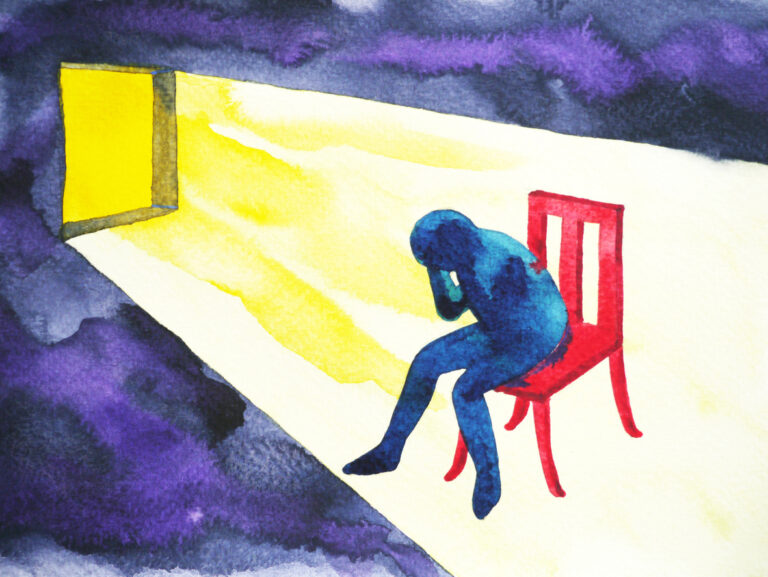
Trafford’s book deals with couples who don’t make it, and if a couple divorces, there will be Crazy Time. I have never seen anyone escape the two years of insanity as two individuals adjust to life apart and all that is involved in that — the legal undoings, going from married to single person, division of property, children, the mental and emotional upheaval and rollercoaster of up and down emotions that have a life of their own. It is common to go off the edge for a while, to feel disoriented, uncertain, confused, and messed up, and while most return to balance, a few will not. I have had two clients commit suicide during Crazy Time, and a few others fall into chronic hopelessness as their identity had been all wrapped up in the relationship. The craziest thing is that the ex choosing to leave is going through Crazy Time, too.
Never tell yourself you’re the only one who feels off the rails in a separation and divorce process … talk to others who have divorced and find that you are not alone. Divorce sends everyone to Crazy Time.It provokes so many fears and so much pain, and the adjustment to major changes is going to cause unavoidable upheaval to your nervous system.
Leaning-in partners — the ones who want to save the marriage — in Crazy Time often enter the process in denial and disbelief. Deciders – the ones leaning toward divorce — may feel relief. But neither will stay there long before wildly differing emotions and feelings take over. A few stragglers go into deep shock, a sort of paralysis where they cannot function. The stages of grief will often be visited several times and in no particular order. Once anger begins, we know that the emotional umbilical cord felt between the two former spouses is finally severing, though some sense of attachment may remain for good. I’ve always imagined a little hole in my heart where that previous relationship was.
Recovery.
The sun almost always returns after the storms of separation and divorce and the uncertainty of the future. Clients I’ve had who professed to have zero fortitude or survival ability surprised themselves and flourished eventually. Still, I always watch with wonder and some trepidation as my post-divorce clients re-enter the world as a newly single adult, much like a child learning to walk for the first time, spending time processing what just happened and learning more about themselves while figuring out what to do and where to go.
Some enter a temporary phase of promiscuity, while others prefer to spend their time alone with family and friends. The longer a person waits to re-enter the dating world, the better, in my opinion.
I feel great hope when clients date themselves for a while and learn to enjoy being alone. If there are still children at home, I like to see my clients focus on their post-divorce well-being and get their children to their mid-teens before bringing other potential partners around, but few take my advice.
Trafford says if post-divorce adults are to have a successful marriage the next time, they should focus on equality, sharing, and partnership. Other essential things that predict a successful second coupling are chemistry and an ability to nurture individuality while being part of a couple. Ignoring the lessons, not being able to be alone, and being in a hurry to recouple are predictors of the divorce pattern and deadlock repeating.
And in the end…
Will any of us ever get over our painful divorce(s)? In most cases, the trauma will pass, but Trafford says the memories of Crazy Time will never leave. If you have children with your ex, you’ll never have an actual divorce, and you may feel some ongoing connection moving forward. The experience of divorce is like a living hell, but those who are solid in the first place will have a much easier recovery than those who are not. The lesson is to be able to stand on your own, if need be, and not to put all of your mental and emotional eggs in the marriage basket.
She is a former features writer and columnist for the San Antonio Express-News, and is the author of“I (Think) I Want Out: What To Do When One Of You Wants Out” published by HCI Books, distributed by Simon and Schuster, and to be released February 4, 2025.
She has worked with thousands of couples to save their marriages. She can work with you, too, as a life coach if you’re not in Texas or Arkansas. She also has aYouTube Channel called Marriage Crisis Managerwhere she talks about relationships. She has a telehealth private practice as a therapist and life coach via Zoom. To contact her, check outwww.MarriageCrisisManager.com. Also, here is how to find her work on theHuffington Post. Don’t forget to follow her on Medium so you don’t miss a thing!
- For licensure verification, find Becky Whetstone Cheairs.
- Marriage Crisis Manager is an Amazon affiliate and may receive a small fee if you purchase recommended books from our links at no extra cost to you.
WORKING WITH ME
I’m Dr. Becky Whetstone, a licensed marriage and family therapist and America’s Marriage Crisis Manager®. I’ve spent nearly 30 years with people at the worst moment of their marriage.
I work with clients everywhere by Zoom. If something in this post hit close to home, here’s where to start.
My book: I (Think)I Want Out: What to Do When One of You Wants to End Your Marriage — Read the whole framework, in order, at your own pace.
Appointment: 90-Minute Marriage Crisis Consultation — Bring me your situation. You’ll leave knowing what stage your marriage is actually in and what to do next.
Relationship University — Live classes and a private community for people who’d rather understand relationships than keep guessing.
Quiz: What Stage Is Your Marriage In? — A free 10-question quiz.
Note. Becky is an Amazon affiliate and may receive a small percentage if you purchase a book from her links, at no extra cost to you.