The Five Winning and Losing Strategies of Marriage.
Terry Real’s Relationship Winning Strategies for Couples.

I work with some of the most accomplished, intelligent, and successful people in the country, and yet most of them act like morons in their interpersonal relationships. We go to school and learn many things, but no one teaches us what we need to know to communicate and get along. It is a learned skill; you can’t wing it and expect good results. Since you have to learn about it intentionally, why don’t you? What will it take for people to take the time and effort to learn the skills to up their relationship game and be sincerely happy with a partner? If the government paid you $5000, would you do it? If you were promised a back rub daily or received some other enticing bribe, would you?
I know what it’s like to be a relational idiot. I was one for many years and, by age 41, ended up in three failed marriages for my trouble. The embarrassment and shame motivated me to take learning about relationships to a significantly higher level. Imagine this: I have always been obsessed with relationship dynamics, dreamed as a teen of becoming an advice columnist, worked my way up to become a relationship guru in San Antonio and wrote a column about them in the newspaper, appeared on local radio, and television regularly taking relationship questions from people, and I got divorced for a third time. Bottom line: who would ever have wanted me to give relationship advice again if I didn’t have brain surgery, a personality transplant, or something equally significant?
Despite a promise to myself that I would never go to school again, I entered graduate school to study marriage and family therapy when I was 41 for five years. Initially, I did it to redeem myself and satisfy public criticism so I could still work as a relationship guru in my career. Still, to my credit, I went all-in when it came to learning. During that time, I dedicated myself to personal growth, attended weekly therapy and workshops, and read and researched marriage and family relationships. I wanted to know: 1. What the hell was wrong with me? 2. What the hell was wrong with everyone else? and 3. What could be done about it?
During that time, I knew better than to get involved seriously with anyone. For the first time, my purpose was more important than finding a relationship. I spent 10 years on my own, dating but never having a boyfriend. Not long into my determination to turn things around, I seemed to awaken. I began to notice traits and characteristics in people more quickly and accurately than before … on a date, I could spot ridiculous, immature men and all their red flags like a human sonar machine that uses sound to detect objects. My ears took in what they said, and my eyes noticed every twitch and movement. I felt their energy and studied their body language. Nothing got past me, and one after the other, I tossed them back into the bin of single men to the point my daughter said she felt sorry for every man I went out with. “Poor fool doesn’t know this is a one-and-done,” she’d laugh. She was usually right. Wasting time with someone who wasn’t functional wasn’t an option, and knowing what that was was an essential first step.
Fast forward 20+ years. I have continued to research and study and have learned even more about functional relationships and emotional intimacy to the point that I consider myself fluent. I genuinely think there isn’t a question asked about relationships that I could not give you a solid answer to. Of all the many great teachers and authors who have influenced me, Pia Mellody, author of Facing Codependence, and Terry Real, founder of Relational Life Therapy,took me past the goal line of feeling fully prepared to teach myself and you about what it is to be healthy and what being functional in relationships is.
Although I’d bet my life on their great information, not everyone can handle hearing the message; quite a few people argue with me and resist the idea that they have childhood trauma (everybody does), and Terry Real doesn’t mess around; he believes in telling people the truth, delivered in a love envelope. The problem is that no matter how a therapist packages less-than-complimentary observations, people resist receiving them and often blame the messenger.
I see you.
Hearing your spouse tell me about you and all of the nutty things you’ve been doing is often not solid or reliable information, but if I see you in action, it’s like hitting therapeutic gold. If Roy insists to me that he doesn’t always have to be right and he shows me in sessions that he does, I get to say, “Wait a minute, Roy, you say you don’t always have to be right, but my experience of you in sessions is that you do.”
When I present irrefutable evidence I have witnessed, my client will most likely fold their cards and face the truth. As much as they may hate this and the process of swallowing pride, depending on how willing they are to receive and accept it, there is the potential for transformation.
The Five Losing Strategies.
Terry Real’s model for having healthy relationships is powerful and straightforward. One of the things he does in his first book for couples, the New Rules of Marriage, is to point out the Five Losing Strategies in Marriage. I often show these negative patterns to couples, discussing which ones they have. Later, we’ll talk about the Five Winning Strategies. Here are the losers:
1. Being Right. These folks like to weigh who is the most right in an argument while gloating in self-righteous indignation. In other words, they’re the partners who are so obnoxious when discussing how a marital situation went down the other spouse fantasizes about punching them in the nose. Here’s why it happens:
Most children learn early on that disappointing their caretakers is painful, and they don’t like feeling hurt, so they create a strategy to avoid that moving forward. As a result, people who have childhood trauma often make a youthful promise to themselves that in the future, to prevent the pain of not being good enough, others must see them as good and perfect. They will die on the hill of not being wrong to ensure that perception. In this case, it is a problem of the ego needing to be seen in a particular light as unflawed.
The problem is that we are human beings and flawed by nature. Perfection is not possible. Remember, this vow made as a child was made by someone at a developmental age incapable of going beyond black-and-white thinking. They couldn’t understand then that good people can do bad things or be wrong. A child’s mind tells them they are bad if they do bad things, so they resist the idea that they ever do anything wrong. After about age 11, we can accept the more abstract concept that says we’re human, we’re flawed, and we may be mistaken for whatever reason, but it doesn’t define us as bad; it just means, in that moment, we weren’t right. I found profound relief when I finally let go of this idea myself.
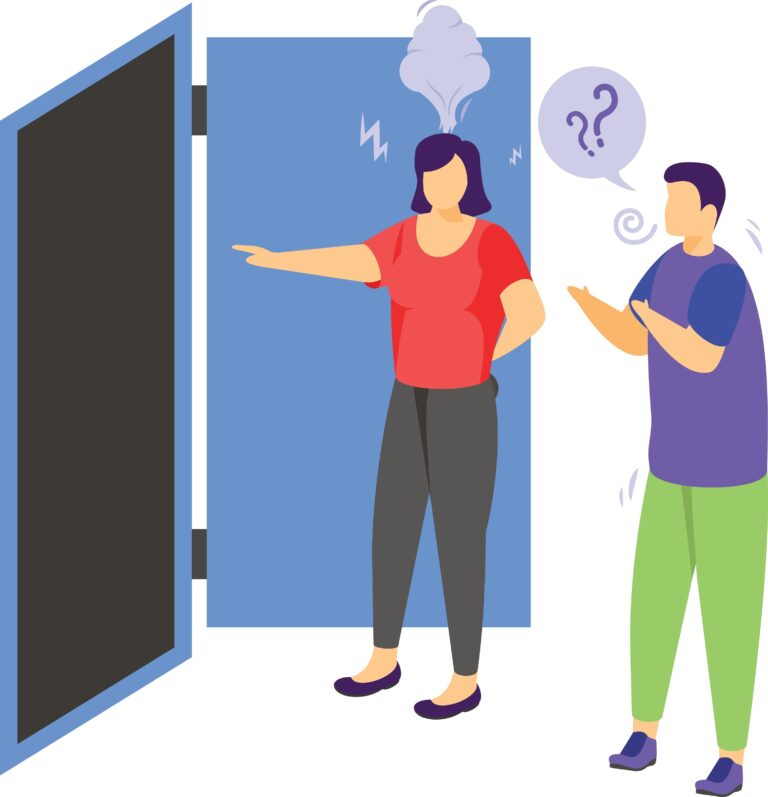
2. Controlling your partner. In this second losing strategy, people who need to control others have low self-esteem and trust issues and are insecure with themselves and in their relationships. In their thinking, controlling their partner is a good solution to the problem, although, ultimately, the only thing we can control is ourselves.
Control can be either blatant or indirect manipulation. Unfortunately for control freaks, humans value freedom over almost anything else, so the people they try to control, usually their spouses, will flinch and resist the saddle. Adults in romantic relationships don’t like it when their partner violates boundaries or has rules they want them to follow. Every adult hates being controlled and will inevitably resist and retaliate.
3. Unbridled self-expression.People who do this typically feel a sense of entitlement to express themselves “authentically and spontaneously.” The problem lies in what they say and how they say it, which is often nasty to the bone, even though they probably promised to respect their spouse in their wedding vows.
In couples therapy, I wish I could unhear some of the things couples say to one another in front of me or as reported in sessions. Some of it is so ugly and unconscionable that my eyes roll back in my head, and I recoil and dissociate rather than sit in my body and feel the energy of one human’s cruelty to another.
Unbridled self-expression means a person has no filter and is willing to say or do anything regardless of their partner’s feelings, no matter the consequences. Most of us feel guilt or have a conscience enough that prevents us from unleashing what we may be thinking out into the ether. The ones who engage in this losing strategy are usually shameless, which doesn’t bode well for the future.
4, Retaliation.When a victim of a relational crime retaliates, a therapist calls it offending from the victim’s position.It’s never a good thing. Therapists like to stop a punitive volleying session between individuals as soon as possible for obvious reasons; it does untold, and often irreparable, damage to relationships.
Those who speak of retribution to a loved one and say, “I don’t get mad; I get even,” send chills down my spine. What kind of a soulless person would want to harm another purposely, even if they have been hurt? Whatever form of retaliation a person selects will be a guaranteed energy drain, which should be an incentive not even to go there. It stuns me how many seem to have endless energy to make others miserable.
Marital war starts because the conflict doesn’t end after one person has been offended. It is when the one in the victim position rolls out tanks of their own. Seriously, people. You can escalate or stop a situation early on and seek to understand one another. That’s what adults do.
I remember a client who found out her husband was cheating and then flew to Las Vegas for the weekend and slept with a random man so her husband could “share her pain.” This is the motivation of retaliators — shared pain. I can assure you that it didn’t help things, and it took about five years for their marriage to get close to getting back on track. It is still wobbly today and probably will be for eternity — it does boggle the mind that they made it at all.
The real issue is, yes, one person engaged in bad behavior. We could have worked on healing and repair. Instead, the injured partner is a misery-loves-company proponent and lacks the grace to work through it and get the marriage to a better place than it ever was. Instead, they would rather tear up the town where it can never be better than it was. The question is, why? Shared pain is why.
5. Withdrawal. When a couple’s nervous systems activate during a dust-up or misunderstanding, it’s appropriate to take a time out and return to work through things when calm. This type of withdrawal is different.
Humans seem to instinctually believe that running from a marital problem and hiding their heads in the sand like an ostrich will cause them less pain in the long run. Well, guess what, it doesn’t, it creates festering infections of resentment and ushers in the loss of hope that kills marriages. John Gottman, marriage and family therapy’s revered research guru, says withdrawal is a predictor of divorce and that couples in intimate relationships that last the long term come toward one another and deal with their stuff head-on. It takes maturity and courage to do that.
The Five Winning Strategies.
Therapists don’t sit in a room and make up the strategies presented here. They come from years of research with thousands of people. Couples have been studied, and many have been followed over many years so that we might learn what behaviors and actions predict divorce and which ones predict a likely lifelong happy marriage. We are armed with solid information and strategies that are known to work.
Terry Real knows this, of course, and he has vast experience working with couples, which is invaluable. With that in mind, Here are his five winning strategies.
1. Shifting from Complaint to request. Look at the difference between these two scenarios:
Julie says to her husband:
“Hey, Steve, I am sick and tired of how you leave your papers and folders stacked all around the family room. It ruins the room, looks cluttered, and embarrasses me. Would you pick this shit up and get it out of here?”
“Hey Steve, may I make a request?” “Sure, honey,” he says. “Would you mind finding a place to store your papers so they are out of sight? I’d appreciate it.”
In figuring out what healthy boundaries for adults are, Pia Mellody, the originator of a model for treating childhood trauma and addiction, learned what works and what doesn’t. For people to get along and be respectful, she found, they must not tell another person what to do, think, or feel. No unsolicited advice, no trying to fix without another’s invitation. Instead of complaining and criticizing, you make a request. One works, the other doesn’t. Understand that when you make a request, the listener has the right to refuse the request, but in marriage, you should agree to reasonable requests made by your partner; otherwise, what are you two doing?
2. Shift to love and repair with respect. Couples tend to sweep issues and disagreements under the rug and never go back to have the conversations that would bring resolution and understanding. This means that garbage is left to fester, untended to. The healthy thing to do is to make an appointment for a repair, planning 10 minutes where they sit down and seek to understand one another, understanding that there may not be a mutually satisfactory outcome. The outcome is not the point; it is being understood. The conversation is kind, calm, and respectful, with zero blame and finger-pointing. It might sound like this:
Shantey: “I have been so upset these past few days because I was hurt when you left me at the party and visited with your friends. I felt alone like you didn’t care. I got really angry.”
Pierre: “I’m so sorry. I sincerely thought you were okay and that you had your friends to visit with. I would never have left you like that if I had thought you weren’t okay with it. I won’t do that again without making certain you’re okay.”
3. Responding with generosity. When I was dating my husband, my favorite thing about him was that whatever negative thing I said about myself, he would reframe it into something positive. This is what a family therapist is trained to do, and it was the first time anyone other than a therapist had done it for me. It was like getting a healing dose of magic tonic. He was responding with generosity.
Another way to do this is to listen to your partner to understand. This takes focused listening, questions, and curiosity, which might result in you saying something like, “Oh, so you weren’t afraid or angry when Betts was visiting; you were just staying quiet because you didn’t feel like getting into anything deep right then. I get it.” Digging with kindness for the whys of what your partner says and does and letting them know you understand is powerful. Try it.
4. Empower each other. What gifts has your partner brought to your life? Have you ever mentioned these things to them?
Imagine if you did.
How would you feel if your partner said, “You know what? If you helped me have some free time on Saturday mornings by watching the kids, I would happily do the same for you in the afternoon.” Helping, working together, giving, receiving. That’s a relationship.
If you have needs, have you tried asking the famous Terry Real question, “What can I do for you to make it easier for you to give me what I need?” Real points out in his books that the whole point of doing all this work is to get what you want and need out of the relationship. You have to give to receive.
5. Cherish each other. I remember a client in Texas who spent most of his free time with his gun collection. He studied his guns, cleaned them, took photos of them, shot them, showed them to people, and cradled them like they were his beloved babies. He attended gun shows, bought more guns, and stored them in safes in a special room he built just for them. When he and his wife came in for therapy, he could not understand why she was so unhappy.
“I’m nice to her,” he said.”I’m a good provider.”
“Most women need more than that to be happy in a marriage,” I said. “I think she wants you to cherish her like you cherish your guns. You spend time, focus, and care on the weapons, and because you don’t do that for her, she is envious of the guns. If your spouse isn’t topped off in what she needs, she’s bound to resent the things that are getting your attention.”
Most of us promise to cherish our spouses in our wedding vows, which means treating them as valuable to us. Cherishing requires time, focus, and action, but in most marriages, couples get busy with careers, kids, and activities, and the cherishing goes out the window. Marriages that have lost this wither, like a plant without the essential care it needs to survive.
And in the end, the love you make …
There are as many ways to destroy a marriage as to have a thriving and healthy relationship. To have a lifelong, happy marriage, implement the five winning strategies and eliminate the five losing ones. Practice Gary Chapman’s Five Love Languages, and sit back and see what happens. I’m pretty sure most readers aren’t doing all they can to have a great marriage where mutual respect and meeting each other’s needs is a regular occurrence.
Pleasejoin our newsletter list here to stay on top of what we’re doing …
Recent podcast appearances:
FYI: Becky is an Amazon product affiliate, and if you order something from her blog, she may receive a small fee at no extra cost to you.
If you want a signed book delivered straight from Becky, visit her website storehere.Becky Whetstone, Ph.D., is a licensed Marriage and Family Therapist in Arkansas and Texas* and is known as America’s Marriage Crisis Manager®.
She is a former features writer and columnist for the San Antonio Express-News and is the author of“I (Think) I Want Out: What To Do When One Of You Wants Out,”published by HCI Books, distributed by Simon and Schuster.
She has worked with thousands of couples to save their marriages. She can work with you, too, as a life coach — she is a licensed therapist in Texas and Arkansas. She also has aYouTube Channel called Marriage Crisis Managerwhere she talks about relationships. She has a telehealth private practice as a therapist and life coach via Zoom.
Education and support groups are available for individuals in a marriage crisis. For more information visit MarriageCrisisManger.com.
Becky is looking for individuals thinking about divorce, people who are cheating, and couples in crisis, or people with amazing personal marriage crisis stories to tell to appear on her video podcast. For information, contact Becky.
WORKING WITH ME
I’m Dr. Becky Whetstone, a licensed marriage and family therapist and America’s Marriage Crisis Manager®. I’ve spent nearly 30 years with people at the worst moment of their marriage.
I work with clients everywhere by Zoom. If something in this post hit close to home, here’s where to start.
My book: I (Think)I Want Out: What to Do When One of You Wants to End Your Marriage — Read the whole framework, in order, at your own pace.
Appointment: 90-Minute Marriage Crisis Consultation — Bring me your situation. You’ll leave knowing what stage your marriage is actually in and what to do next.
Relationship University — Live classes and a private community for people who’d rather understand relationships than keep guessing.
Quiz: What Stage Is Your Marriage In? — A free 10-question quiz.
Note. Becky is an Amazon affiliate and may receive a small percentage if you purchase a book from her links, at no extra cost to you.