Attention Infidelity? Should We Be Worried?

Depends on what you’re doing on your device as to whether it is infidelity, doesn’t it? Graphic: Canva AI
It’s 10 p.m. Two people are lying in the same bed, a foot apart. Each face is lit blue by a screen. She’s scrolling Instagram. He’s watching sports highlights with one earbud in. Nobody is fighting. Nobody is cheating. And nobody is there. Emotionally, at least.
If you’d asked either of them that night whether their marriage was in trouble, they’d have said no, but they probably also would have said it had landed in cruise control. Six months later, one of them is sitting across from me on Zoom saying, “I don’t know when we stopped being us, but somehow we just got disconnected.”
I know how it happened, and these days it is often because you stopped making your spouse a primary focus, something that has happened to couples for centuries and is almost as common as marriage itself.
So why is the problem being talked about now? Because some experts are saying the emotional disconnect is exacerbated by your fabulously stimulating electronic devices to the point that they consider it in the same category as cheating, calling it attention infidelity.
The little rectangles that fit in a hand or a lap and take up more and more of your time and attention: the average adult worldwide spends six hours and 45 minutes a day on screens, including computers, which is roughly 42% of waking hours assuming 8 hours of sleep, according to DataReportal (2025), a free online platform that publishes “extensive research reports and statistics on global internet, social media, mobile, and digital marketing.”
This means most of us spend more of our lifetimes staring at some sort of electronic device than we do on any other activity, except sleep, says DataReportal. On average, two and a half hours are spent on social media.
Those little devices just keep getting better and better, right? But are the devices responsible for our disconnect, or would we have disconnected no matter what?
The Quiet Betrayal
The pollster Daniel Cox, director of the Survey Center on American Life and a senior fellow in polling and public opinion at the American Enterprise Institute, has a name for this particular type of screen time disconnect. In his forthcoming book, Generation Uncoupled, he calls it “attention infidelity”: when a partner’s digital life intrudes on the in-person connection. Sometimes that means porn or flirty DMs, as we all know. Far more often, he says, it’s just the dead-eyed scroll.
Looking at the news, sports, scrolling through social media, checking texts, and email.
This came to my attention in a New York Times article published Sept. 30, 2026, entitled ‘Attention Infidelity’ Is Ruining Romance by Jessica Grose. Having just written an article on individuals having romantic affairs with AI chatbots, I said to myself, “Well, here we go again, with one more thing creating problems in marriage,” but I must admit, my own spouse complains about my phone and tablet usage, and many of my clients complain about it affecting their relationships negatively, so I already know it can, and often is, an issue.
I love, love, love my electronic devices, but not in that way. For me, it is the greatest thing that has happened in my life that doesn’t involve humans. Whether I am researching things for my latest article, trying to grow my business, or looking for the perfect brown boots that I know I will never find in shopping-selection-bare Little Rock, Arkansas, with my phone or tablet, there is never a dull moment. Five minutes ago, I ordered groceries for delivery. How wonderful.
I love variety, and I can find whatever I am in the mood for on my tablet. And what a way to kill 15 minutes when you’re waiting on something or someone, too. Too bad my retired husband wishes I would put it down and spend more time with him, but honestly, when I look over at him on the couch, he is wearing his index fingertip out, scrolling, too. He may disconnect by watching television and YouTube golf videos, but I don’t find it a problem, and after working for 40 years in a highly stressful medical practice, I’m glad he has attention grabbers he enjoys and time to relax. I do tease him about getting arthritis in his index finger, though. When I do, he looks at me as if to say, “You’re one to talk.”
But are we cheating on each other? Not hardly; I have zero interest in talking romantically to anyone except for my spouse, and I know my husband is the same, and the current criteria delineating cheating are three areas at least: secrecy, erotica, emotional withdrawal. In our case, I will put the tablet down whenever needed or if he wants to engage in real conversation, so I am having a problem with the way Cox uses the term infidelity in regard to non-sexually oriented screen time.
Billy C.
In the distant past, cheating was defined narrowly, and sexual intercourse was the sole criterion. Then my fellow Arkansan and family friend Bill Clinton came along and doodled with an intern and a cigar, and the subject of whether oral sex qualifies as sex became a discussion, and whether it should be considered a criterion for having an affair.
Clinton, of course, argued that this was not sex, and influenced millions of Americans to join him in minimizing it as a mere nothing-burger, but that didn’t last for long.
My point is that this moment in history, and the advent of the Internet, forced us to broaden the definition of what cheating actually is, or can be.
Pretty soon into it, it became fairly universally agreed that oral sex with someone else is classified as cheating, and pretty quickly, emotional affairs were bumped up the violation severity list to just as bad as physical affairs. I’ve written repeatedly that I refuse to quibble with cheaters over what they did and how many times, because to me, they are all equally terrible. Just ask any spouse who is experiencing the distress of such a predicament.
If anyone still doubts this, just ask yourself, “If I were married and my spouse discovered I was getting and/or giving oral sex to another, what would their reaction be?” What would your reaction be if your spouse did the same?
But Cox defines infidelity differently: he says it is something that gets the best of you, and your spouse gets what’s left. By that measure, a lot of faithful people are cheating every single day.
Cox’s Research.
The research Cox speaks to on attention infidelity backs up what I see in my practice. An Institute for Family Studies survey of 2,000 married Americans found that 37% say their spouse is frequently on the phone when they’d rather be spending time together. Among those couples, 26% worried about divorce. Among couples without phone problems, just 7% did.
I have seen thousands of spouses beg their partner to put their phone down for work. During dinner. While watching television. “Please put your phone down and join the family!” What time it will be put down, and for how long, then becomes negotiable; bartering may take place, as if the person enamored with their device were fighting for their life.
“This is how I make money!” is a frequently heard justification that always falls flat. I recommend that people make no excuses. Just own it. You love that damn device and all the magical places it can take you, including feeding your work addiction. And, by the way, is the problem the work addiction, or the device?
The Fight Isn’t About the Phone
Couples come to me arguing about screen time, of course, but in the end, this is really just a complaint about an unmet need and never about the phone.
That is how the late marriage therapist Gary Chapman came up with the idea of humans having five love languages. He found that complaints in his sessions centered around five themes: You don’t touch me enough, you don’t say you appreciate me, you don’t spend enough quality time with me, you don’t help me, and you never buy me gifts.
Voila! The Five Love Languages were born, and they are:
Physical touch
Words of affirmation
Quality time
Acts of service
Gifts
When one spouse says, “You’re always on that thing,” what they mean is, “You aren’t spending enough quality time with me.” It’s a bid for connection delivered via complaint, but underneath the story is the need, the need for more focused time with their mate.
What’s going on with you and what do you need?
It would be far better to tell your spouse what you need more of than to complain about the action that is putting their focus elsewhere. A spouse who needs more time with you sees your face buried in a device as a betrayal of your quality time together. Unless they are topped off in their quality-time needs, they will resent the time your electronic devices — or anything or anyone else — are getting.
So, the trick is to give your partner enough quality time so they don’t resent the focused time you are spending on other things. This is the art of marriage. Keep your spouse topped off in their love languages, then you can stick your nose back in your device without hearing complaints. Fulfill your partner’s needs first, then go play.
But people are generally terrible at noticing what they want and need and advocating for it. This is the kind of stuff I am teaching now in my new Relationship University community, and it will save you numerous arguments and maybe your marriage in the long run.
Spouses who are unaware of each other’s needs and wants become complainers, and we all know how much humans love to complain. If my husband complains, I just feel so warm and fuzzy inside. Not! Hee, hee.
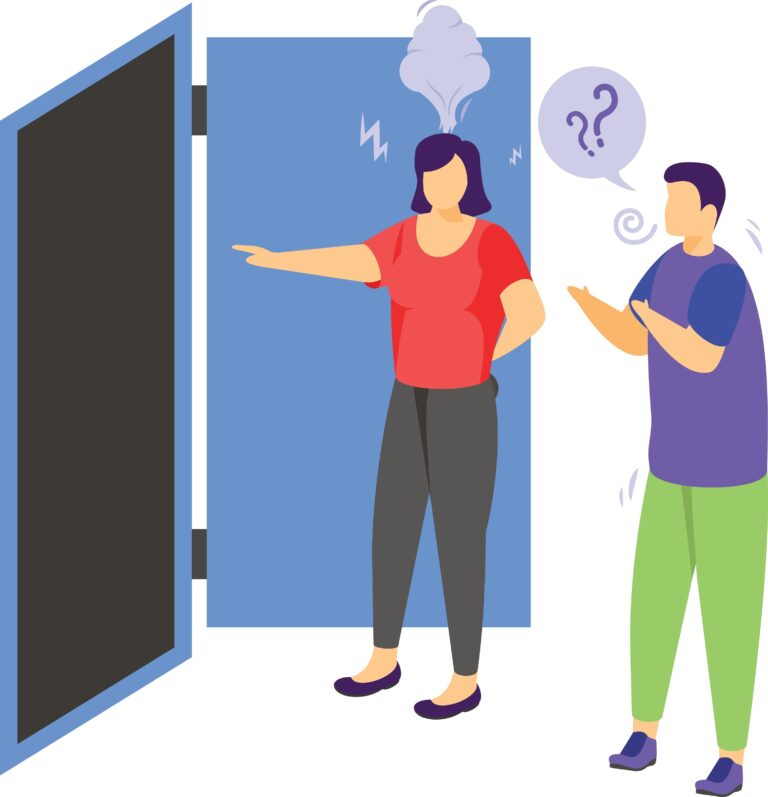
Typically, when a person is criticized or scolded, they don’t hear the underlying need or loneliness driving the entire gripe. They hear criticism. They hear control. So, they defend the phone. “I’m just checking the news.” “You’re on yours too.” “Why are you policing me?”
Criticism and defensiveness are predictors of divorce.
Now the argument is about the device, and the hurt underneath never gets named. One person turns into the nagging parent. The other turns into the rebellious teenager — if you don’t know what I’m talking about, run, do not walk, to pick up Terry Real’s relationship-changing audiobook, Fierce Intimacy. If you do, you will learn that nobody wins that fight, and the distance between you will grow. Blah, blah.
Yes, people reach for their screens when the marriage feels boring, tense, or unsafe, but there are also legitimate, good, and helpful things that can happen while using these devices. I can return a quick email while sitting on the couch with my husband after work. This alleviates my stress about the things I haven’t gotten done and allows me to reach a place where I can relax.
Sometimes the scrolling is a symptom of distance that was already there. For example, it’s a wonderful tool for emotional avoidants who love to hide, but sometimes it is a way to squeeze more obligations in so you can put the darn thing down and not have “I should haves” and “I need to’s” spinning around in your head.
Where the Scroll Leads
I’ve sat with the wreckage of hundreds of affairs. A remarkable number of them started with a phone, the seemingly innocent exchange of a phone number between two people, or a comment from an old flame on one of your social media feeds.
Why do so many people turn to a device to betray their spouse? Because people are lazy and it’s convenient. When faced with choosing between the path of extra effort to find something and the path of least effort, humans are notoriously hard-wired to find the extra effort less appealing. This is why I often order my groceries online.
When a person is thirsty for romantic connection and/or focused attention and doesn’t find it at home, they are a sitting duck for a person or AI chatbot that turns playful, validating, fun, and exciting — well, you know the rest.
Attention infidelity is just a means to an end to achieve the other kind of infidelity that I believe would have happened anyway. The antidote is to be self-aware, tuned in to yourself and your partner, your and their needs and wants, and how emotionally fulfilled each of you is at any given time. You can stay connected and spend hours a day on your devices.
What to Do About It
Start by calling it what it is. Say it out loud, not “We have an attention infidelity problem,” but “I sense we are becoming disconnected.” It’s no longer you against the person holding the phone. It’s both of you against the thing stealing your marriage.
Then stop attacking the device and name the need. “You’re addicted to that thing” starts a war. “I miss you. I want you back to chat with at night” starts a conversation. One makes your spouse defensive. The other makes them look up.
Next, build rules you both agree to, not rules one of you enforces. No marriage needs a policeman. Phones charge in the kitchen after dinner. No screens in the bedroom. The first 30 minutes after you both get home belong to each other. The specifics matter less than the agreement. If only one person wants the rule, it becomes a leash, and leashes get chewed through.
Finally, ask the question most couples avoid: what is the phone helping you escape, if anything? If the honest answer is “our marriage,” you don’t have a screen problem. You have a marriage problem, and that’s exactly the kind of crisis that deserves real help before it becomes a real affair.
I can absolutely promise you that I am not escaping anything when I am spending free time on my device. I am a curious person who loves learning and reading, seeing what my friends and family are up to, and that’s about it. I firmly believe most of us don’t use devices as an escape.
What focused attention really is.
Focused attention is the most valuable thing we can give anyone. It is the only way we can give ourselves completely to someone in any given moment
Full attention is indeed a precious commodity. If you aren’t getting enough of it, advocate for yourself, but don’t blame the device. It’s the humans at the helm of the device; that is where the real problem lies.
Sources: “More Scrolling, More Marital Problems,” Institute for Family Studies. Daniel Cox, Generation Uncoupled: America’s New Gender Divide and the Crisis of Human Connection (forthcoming), as cited in The New York Times.
Not sure what stage your marriage is in? Take my free quiz: What Stage Is Your Marriage In? If you’re in crisis right now, book a 90-Minute Marriage Crisis Consultation and let’s figure out your next move together.
WORKING WITH ME
I’m Dr. Becky Whetstone, a licensed marriage and family therapist and America’s Marriage Crisis Manager®. I’ve spent nearly 30 years with people at the worst moment of their marriage. I work with clients everywhere by Zoom. If something in this post hit close to home, here’s where to start:
Book: I (Think) I Want Out: What to Do When One of You Wants to End Your Marriage — Read the whole framework, in order, at your own pace.
Meeting: 90-Minute Marriage Crisis Consultation — Bring me your situation. You’ll leave knowing what stage your marriage is actually in and what to do next.
Relationship University — Live classes and a private community for people who’d rather understand relationships than keep guessing.
Quiz: What Stage Is Your Marriage In? — A free 10-question assessment. Two minutes, and you’ll know where you stand.
beckywhetstone@gmail.com · marriagecrisismanager.com
The book link is an Amazon affiliate link.