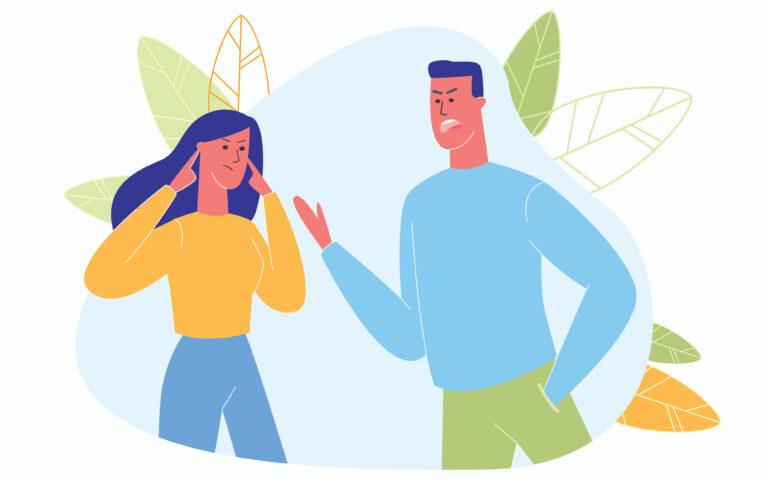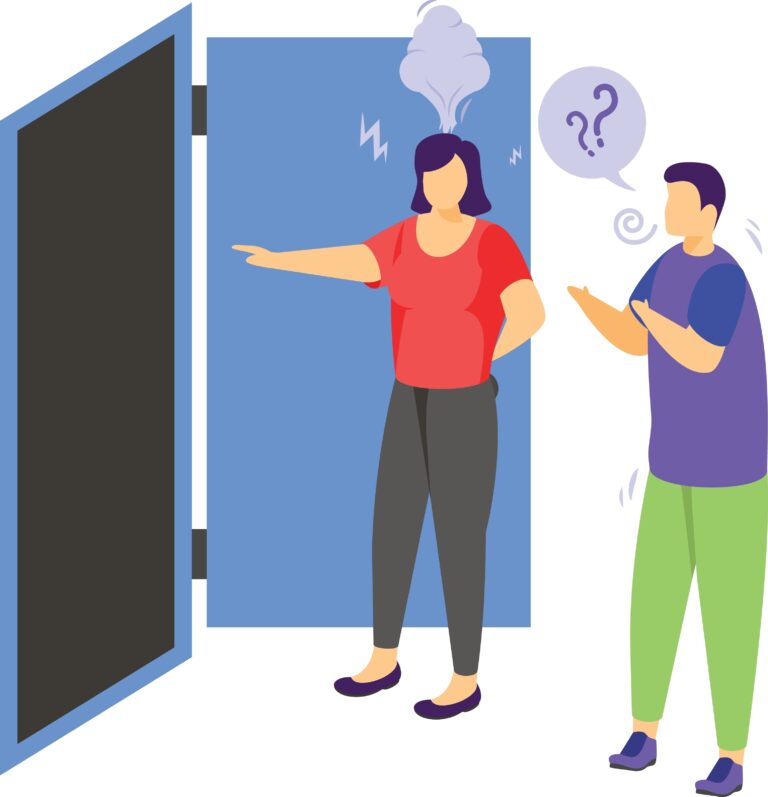
Adult Bullying Is Abuse: Why Bullies Do What They Do — and How to Stop Them.
Why the Hell are People So Mean?
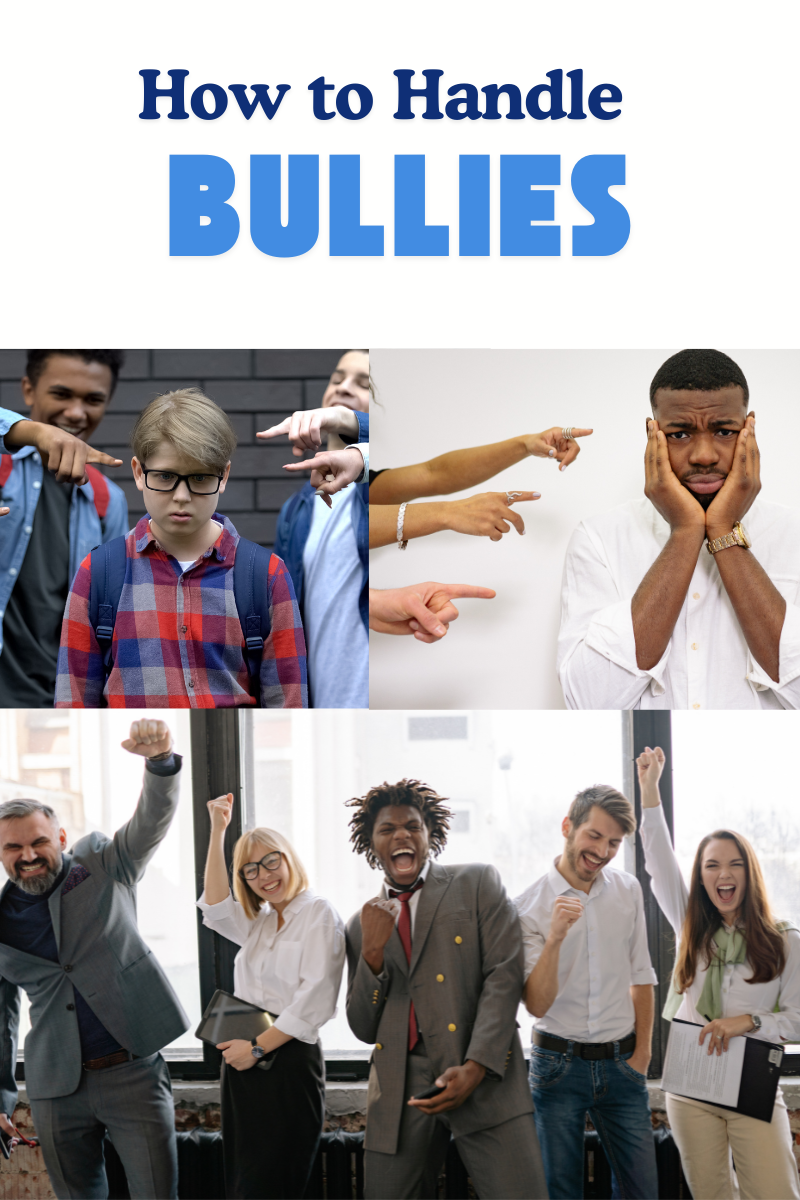
It took me years to learn how to deal with abusive bullies. They are everywhere — online, in schools, workplaces, families, places of worship, and anywhere two or more people gather.
For a long time, I took what people call “the high road” when someone’s negative focus was directed at me. I bumbled through life, encountering aggressive, passive-aggressive, meddling, invasive, manipulative, shameless people who could not mind their own business or let others exist peacefully. I didn’t know how to manage them.
When children are bullied, parents often say things like, “They’re just jealous,” or, if it’s a boy, “He likes you.” That explanation never resonated with me. I assumed my parents were trying to make me feel better. At times, I even thought, Maybe they’re right. Maybe I really am awful. Maybe I deserve this.
My first bully was my sister Martha. I was 4. She was 10.
Her abuse was relentless. She attempted to disempower me by filling my head with messages like: You’re ugly. Everyone thinks you’re disgusting. No one wants to be around you. My friends won’t come over if you’re here. She mocked my appearance, physically restrained me, spit on me, locked me outside at night, and once trapped me in a bathroom and sprayed toxic chemicals inside while I struggled to breathe.
She nearly destroyed my ability to function emotionally and psychologically. Therapy in my 20s saved me.
I still wonder where my parents were — and why no one intervened. Martha did admit to me when we were much older that I had qualities she envied; she had been jealous and wanted, therefore, to make me suffer.
In 1969, my family moved to a new city, and the bullying continued, this time from classmates. I was in fourth grade and had rarely, if ever, been bullied by schoolmates. I begged my parents to move me to another school. They didn’t.
So I learned to stay silent. And I stayed silent for decades.
In workplaces, bullies were there too. I looked away. I kept my mouth shut. I laughed things off. I repressed. And when it continued into adulthood, I’d find myself staring out a window with a glass of wine, thinking, What the hell is wrong with people?
Eventually, I had to ask a different question:
I began to sense that staying silent wasn’t healthy for me. So I asked, what is the healthiest and most effective way to deal with bullies?
Clinical Perspective: Adult Bullying Is Emotional Abuse
Adult bullying is not simply “difficult behavior” or a personality conflict.
Clinically, it is a form of emotional and psychological abuse.
Mental health professionals typically identify bullying by several consistent traits:
- Power-seeking rather than problem-solving
- Entitlement rather than accountability
- Blaming others rather than self-reflection
- Little or no remorse when harm is pointed out
Many bullies are highly reactive at the nervous-system level. When challenged, they move quickly into a fight response—dominating, intimidating, or escalating rather than reflecting or repairing.
Because of this, traditional conflict-resolution strategies often fail. The goal of a bully is not mutual understanding; it is control, status, or dominance.
Targets of bullying frequently develop symptoms such as:
- Anxiety or hypervigilance
- Self-doubt and loss of confidence
- Sleep disturbances
- Depression or withdrawal
- Trauma responses similar to complex PTSD
These reactions are normal responses to chronic interpersonal stress, not signs of weakness.
Effective interventions typically include:
- Reality testing — accurately naming the behavior
- Boundary-setting with consequences
- Limiting exposure to the bully
- Restoring self-trust and personal agency
Bullying behavior rarely stops because a bully develops insight or empathy.
It stops when access is limited, and consequences are enforced.
Do Bullies Know What They’re Doing?
After decades of exposure — and later, formal training in humans, relationships, psychology and trauma — I took a deep dive into the minds of people who are cruel, mean, and sadistic.
My first question was simple: Do they know they’re harming others?
In most cases, the answer is yes.
I found that bullying generally falls into three categories:
1. Conscious, Deliberate Harm
This group is the minority. Their intent is to harm. They often have antisocial traits, including a lack of conscience and remorse. Their goal is to punish, humiliate, intimidate, silence, and dominate.
2. Instrumental Harm
This is the most common form of bullying. The bully knows they are harming someone, but the harm is secondary to their goal. They justify their behavior as “necessary,” “deserved,” or “collateral damage.”
3. Defended Awareness (Plausible Deniability)
This passive-aggressive, covert bully avoids conscious responsibility. They use vagueness, gaslighting, and ambiguity to escape accountability. Their favorite phrases include:
“I didn’t mean it that way.”
“You misunderstood.”
“That wasn’t my intention.”
Most bullies understand cognitively that they are causing harm, but they do not experience guilt, remorse, or regret. They are shameless. They cannot tolerate being wrong. When confronted, they blame the target, rewrite their intent, and attack the credibility of the person calling them out.
The internal math of a bully often goes like this:
Because I feel justified, the harm doesn’t count.
When challenged, their sympathetic nervous system fires. They move into a fight response — dominate, control, destroy. They may know they are harming someone, but they feel entitled to do so.
Who Bullies — and Why
Bullies seek two things: threat and access.
They are threatened by people who stand out — those who are competent, secure, respected, talented, or close to power. Access determines whether they can act on that threat.
The internet has dramatically expanded access. Cyberbullying, doxing, and online pile-ons allow people who have never met to invade one another’s lives, reputations, and livelihoods. I have been doxed. It is terrifying.
The goal is always the same: to terrorize, traumatize, and silence.
I lived in Australia for six months in the 1980s and learned about the concept of Tall Poppy Syndrome — the tendency to cut down those who rise too high. We may not use that term in the United States, but the dynamic exists with a caveat. People are often accepted only if their success is perceived as earned in a way others approve of. If not, they may be targeted.
Bullies frequently feel deeply inadequate. Many were scapegoated themselves earlier in life and learned to survive by projecting shame, anger, and fear onto others. This creates a chain reaction that repeats across families, workplaces, and generations.
Bullies do not focus on improving themselves. They focus on stopping the person who threatens them.
Bullies in Families
Families are not immune.
When estates are settled, relationships tested, or resources distributed, family bullies often emerge with striking clarity. If someone stands between them and what they believe they deserve, they may escalate to intimidation, estrangement, legal threats, or smear campaigns.
Family bullies often justify their behavior by portraying themselves as victims, even while they are actively harming others.
How to Deal With Bullies: What Actually Works
This is the part most people get wrong.
You do not stop a bully by understanding them, empathizing with them, or taking the high road.
And our soul watches us when we are abused and do nothing, and sinks in despair at a lost opportunity. Strength and self-advocacy are what our souls need to release the traumas we hold inside.
Bullies do not respond to compassion: “Oh, he must have been wounded by people, poor thing, and that makes him lash out.”
Bullies respond to limits. I am telling you as strongly as I can, for your own mental and emotional health, do not let bullies get away without consequences.
The most effective approach has three parts:
1. Name the Behavior
Calmly and clearly identify what is happening. Do not argue intent. Focus on impact.
“When you speak to me that way, it is disrespectful and unacceptable.”
2. Issue a Warning
Bullies test boundaries. A warning tells them the test has been noticed.
“If this continues, I will remove myself from this situation.”
3. Enforce Consequences — Every Time
This is the step people avoid — and the one bullies understand.
Consequences may include disengagement, documentation, formal complaints, legal action, blocking, or ending contact altogether.
No debates. No over-explaining. No repeated chances.
Boundaries without consequences are suggestions.
Bullies stop when the cost of continuing exceeds the reward. Your job is not to change them. Your job is to protect yourself.
Bullying is abuse. It damages nervous systems, self-esteem, and trust. If you are affected by it, you are not weak. And you are not required to tolerate it.
Silence protects bullies.
Boundaries expose them.
Becky Whetstone is a marriage and family therapist and specialist in marriage therapy, marriage crises, separations, divorce decisions, amicable divorce, co-parenting, and stepparenting issues. She works with individuals and couples all across America and the world via telehealth. Contact her at beckywhetstone@gmail.com or visit her website at www.MarriageCrisisManager.com.
She has appeared in national and international media and numerous podcasts, and has released her memoir, The Congressman’s Wife: A Political Memoir, available for now only on Substack, about her five years married to a powerful man, and her fight for fairness.
If you like this, you might like this: https://marriagecrisismanager.com/false-accusations-workplace-bullying-another-cultural-problem-needs-fall-away-personal-story/
And this … https://marriagecrisismanager.com/setting-boundaries-is-the-ultimate-healthy-self-care/