The Two Kinds of Change: One is Temporary, the Other Permanent.
Why Some Transformations Last — and Others Don’t
Can people really change? That is the question so many of my clients have asked over the years when contemplating whether to stay or go. And if people can change, why don’t they?
Understanding the different types of change is helpful to answer these questions. Only 5 percent of the population will experience significant changes. Human beings can be fearful animals, and far too many choose to exist in the discontentment they know rather than the possibility of things getting better, because they simply cannot handle the risk of the unknown.
To that, I always say: “If you trust and believe in yourself, you’re smart, can figure things out,” then you can count on yourself to make the change a positive one.”
However, most people do not trust or believe in themselves, don’t think they are smart, even though they are, and therefore doubt their ability to figure things out. Do they want to change that? Yes, but …
Change in marriage.
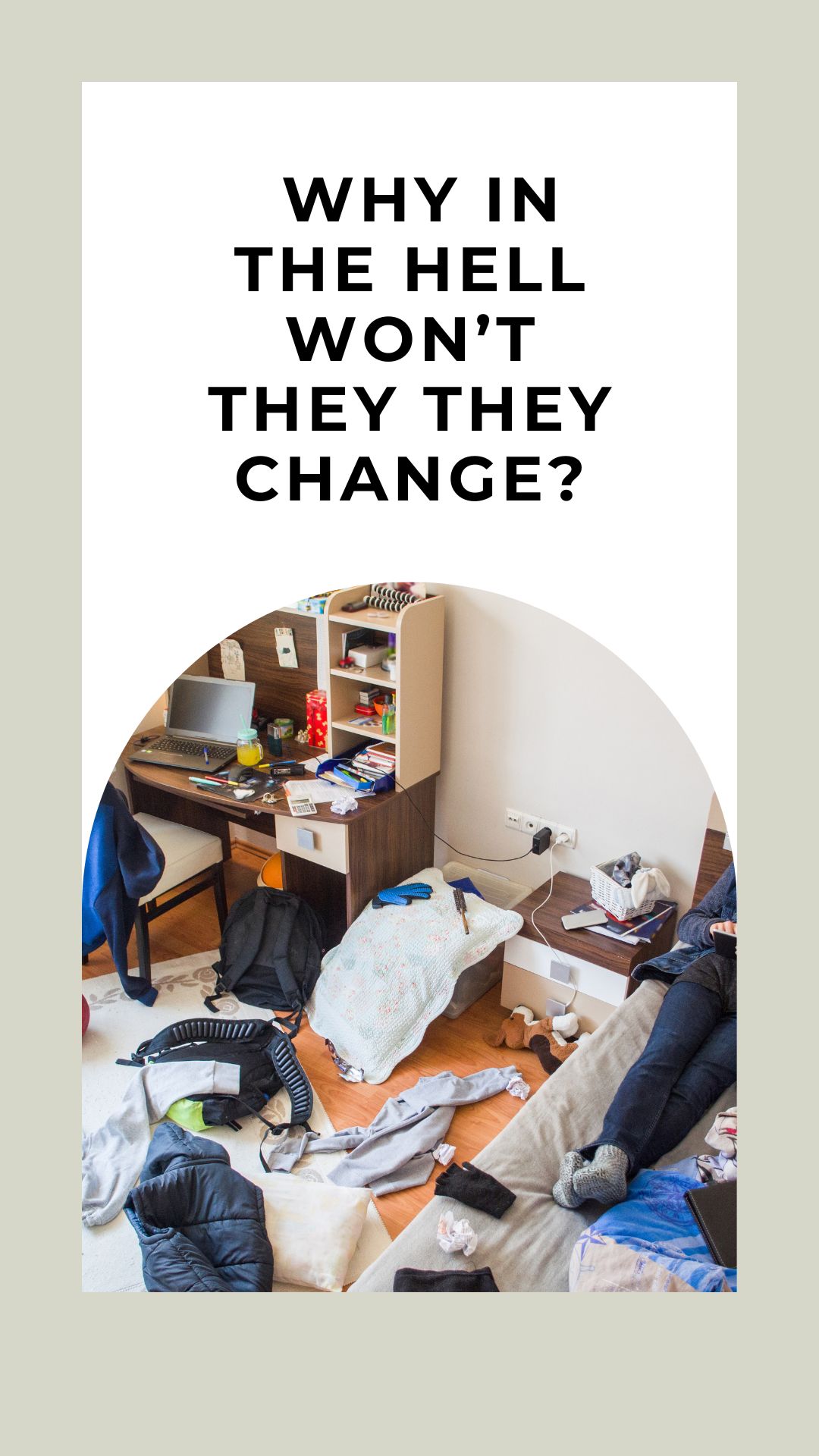
In marriage, the kind of changes we most commonly see really aren’t changes at all. Jackie’s husband, Christian, has asked if she’d please keep the bathroom and closet picked up; they share the areas, and clutter really bothers him, as he’s been known to stub his toe by running into something he couldn’t see.
Jackie cleaned the areas up, then picked up after herself for two weeks, and then slowly things went back to the way they were. Clothes and cosmetic wrappers everywhere.
The type of change that lasts for a brief while is a form of placating known by marriage and family therapists as first-order change. This type of change means doing something that is requested, but your heart doesn’t fully buy into the necessity of it. It is a temporary adjustment, not a transformation.
How it works: If I don’t believe making a bed is important or necessary, and my husband wants me to make it up since I usually get up last, I might do it a couple of times to shut them up, but soon enough, I’ll leave the bed rumpled again.
People make these sorts of temporary changes to calm conflict, get people off their backs, avoid consequences, or look cooperative. I call this surface-level change — it’s designed to placate, not to grow:
- “Fine, I’ll stop doing that if it makes you happy.”
- “I’ll try to be better,” but only until the tension fades.
- Sudden bursts of self-improvement after conflict, with no follow-through.
This kind of change rarely lasts because the person hasn’t shifted their belief system — only their behavior. It’s like painting over a cracked foundation: it looks good for a while, but the cracks always return.
What Research Tells Us About Change
Psychologists have studied what truly motivates people to change for decades. The findings are remarkably consistent: lasting change originates from within, not without. Here are a few of the most common theories of change:
1. Self-Determination Theory (Deci & Ryan, 1985)
People change most effectively when they feel autonomy, competence, and connection. When change feels forced, motivation tends to fade. But when it aligns with one’s values and relationships, it becomes sustainable.
This is why I hate it when parents drag struggling children to therapy and tell the therapist, “Fix them!” Or court-ordered therapy with a person who absolutely does not want to be there.
When a mom calls me and asks if I will see her 22-year-old son, I ask two questions: “Does he want therapy?” and “Why didn’t he call himself?” He won’t be seeing me unless he does.
2. Transtheoretical Model (Prochaska & DiClemente, 1983)
This model describes six stages of change — precontemplation, contemplation, preparation, action, maintenance, and relapse. Successful changers move through these with support and accountability.
If you’ve ever been on a diet or tried to stop drinking or smoking, you:
· Precontemplation, “Probably best if I do something about this …”
· Contemplation, “How will I go about doing this?”
· Preparation, “I’ll go to the doctor and ask for a medicine to help me stop drinking, and will look into going to a 12-step program.”
· Action: goes to the doctor, joins Alcoholics Anonymous (AA).
· Maintenance. Takes medication, gets a sponsor in AA, and attends meetings regularly.
· Relapse. Decided to drink one drink at a special occasion event and could not stop.
Not everyone relapses, of course, but quite a few do. This particular model of change resonates with me and my experience. As a person who has undergone significant changes since her 20s, I was incredibly motivated almost from the start to understand mental, emotional, and relational dynamics. However, every piece after that, as I worked to tweak and change this and that in response to my changing wants and needs, involved these steps. I never relapsed back into where I started, probably because I was positively rewarded by feeling so much better and didn’t want to lose that.
3. Cognitive Dissonance Theory (Festinger, 1957)
We’re wired to want consistency between our beliefs and actions. When those conflicts arise, we experience discomfort — known as cognitive dissonance. True transformation happens when we realign our actions with our values.
This is one I see in my clients on a regular basis. They hate the situation they are in, they complain incessantly about it, then do nothing about it, and, of course, feel the depression, stress, and anxiety of not being true to themselves. As one of my graduate school professors said about this: “Oh, they’re miserable, just not miserable enough to change their situation. They have to get miserable enough.”
This is why a marriage and family therapist might encourage a spouse to stop any enabling of their spouse, or to make them a tad more uncomfortable, perhaps by going on strike, moving out for a few weeks, or otherwise upping the ante of the complacent spouse’s discomfort. This is called shaking up the (family) system, and is how we can manufacture actual change by making someone more uncomfortable, which may motivate them to change. We want them to reach that moment of being miserable enough that it ultimately leads a person to a second-order change.
First-Order vs. Second-Order Change in Marriage and Family Therapy
In Marriage and Family Therapy (MFT), we distinguish between first-order and second-order change, concepts initially developed by Paul Watzlawick and colleagues in the 1970s. I explained the first-order change above, which refers to the temporary changes people make to placate others when their heart isn’t really in it. However, what my clients are looking for is lasting change, and that is what we refer to as second-order change.
Here are MFT’s definitions of the two:
- First-order change refers to making more or less of something within the same framework. For example, a couple might communicate a little more kindly, or fight a little less — but the underlying dynamic stays the same. It’s an adjustment, not a transformation.
- Second-order change, on the other hand, alters the system’s structure itself. It’s a deep, internal reorganization of how people relate, think, and emotionally respond. It’s not “acting better” but being different.
In therapy, I see second-order change when a partner no longer needs to be right to feel safe, or when someone realizes that vulnerability, not control, is the absolute path to intimacy. Light bulb moments of awareness often lead to second-order change, because in that moment, a person sees clearly that what they just saw or heard is much better than what they believed or did before.
That’s when the entire emotional system shifts — from defensiveness and power struggles to openness and connection.
The Anatomy of True, Lasting (Second-Order) Change
True second-order change — the kind that sticks and brings peace — happens when people adopt a new way of seeing the world. It’s powered by awareness, ownership, humility, and love.
In my work with couples in crisis, I often see the turning point when one partner says:
“I finally understand how my behavior affects you — and I don’t want to be that person anymore.”
That’s not compliance. That’s conversion.
From that moment, they stop performing change and start embodying it. That’s second-order change in action — when beliefs, emotions, and behaviors align around a new, higher truth.
How to Create Lasting, Second-Order Change
If you’re ready for genuine transformation — in your marriage, your mindset, or your emotional life — here’s how to start:
- Get honest. Acknowledge what isn’t working without excuses. You have to be willing to be humble and to look within yourself and accept responsibility for what you’re doing, or not doing, that might not be working toward connection.
- Find your “why.” Connect emotionally to what’s at stake if you don’t change.
- Seek support. A therapist or coach helps you stay grounded as you move through discomfort. Discomfort never killed anyone, though some of my clients act like it will. We’re all adults and can handle frustration, disappointment, and even the possibility of hurting others to get to a higher place.
- Practice daily. Change becomes who you are through repetition and self-reflection. This literally changes the neuropathways in your brain to a different outcome.
- Stay humble. Growth is never linear. Each stumble is an invitation to grow deeper roots.
Final Thoughts
Temporary change soothes others. True change transforms you.
In Marriage and Family Therapy, we believe second-order change — when the entire emotional system reorganizes around a new, healthier way of being is attainable if a person can set their pride and ego aside and be humble.
When change comes from the heart, your life — and your relationships — begin to reflect peace, authenticity, and maturity. That’s what I call real transformation.
If you’re ready to experience second-order change in your marriage or personal growth journey, visit MarriageCrisisManager.com to learn how I help individuals and couples turn insight into authentic, sustainable growth.
Dr. Becky Whetstone, Ph.D., LMFT, LPC, is a marriage and family therapist and the creator of the Radically Positive Amicable Divorce and Co-Parenting Plan — join our Facebook group here, the Radically Positive Co-parenting Plan, and the Radically Positive Marriage Crisis Management Plan. Learn more at marriagecrisismanager.com or contact Becky at becky@doctorbecky.com, or to request us to contact you, click here.